A Florida roof works hard every year. Heat expands and contracts materials, heavy rain tests drainage, wind moves debris and coastal air can be rough on exposed components. Maintenance does not make a roof immune to failure, but a consistent record helps homeowners catch visible concerns, plan repairs and avoid turning every issue into an emergency.
Keep water moving away from the building
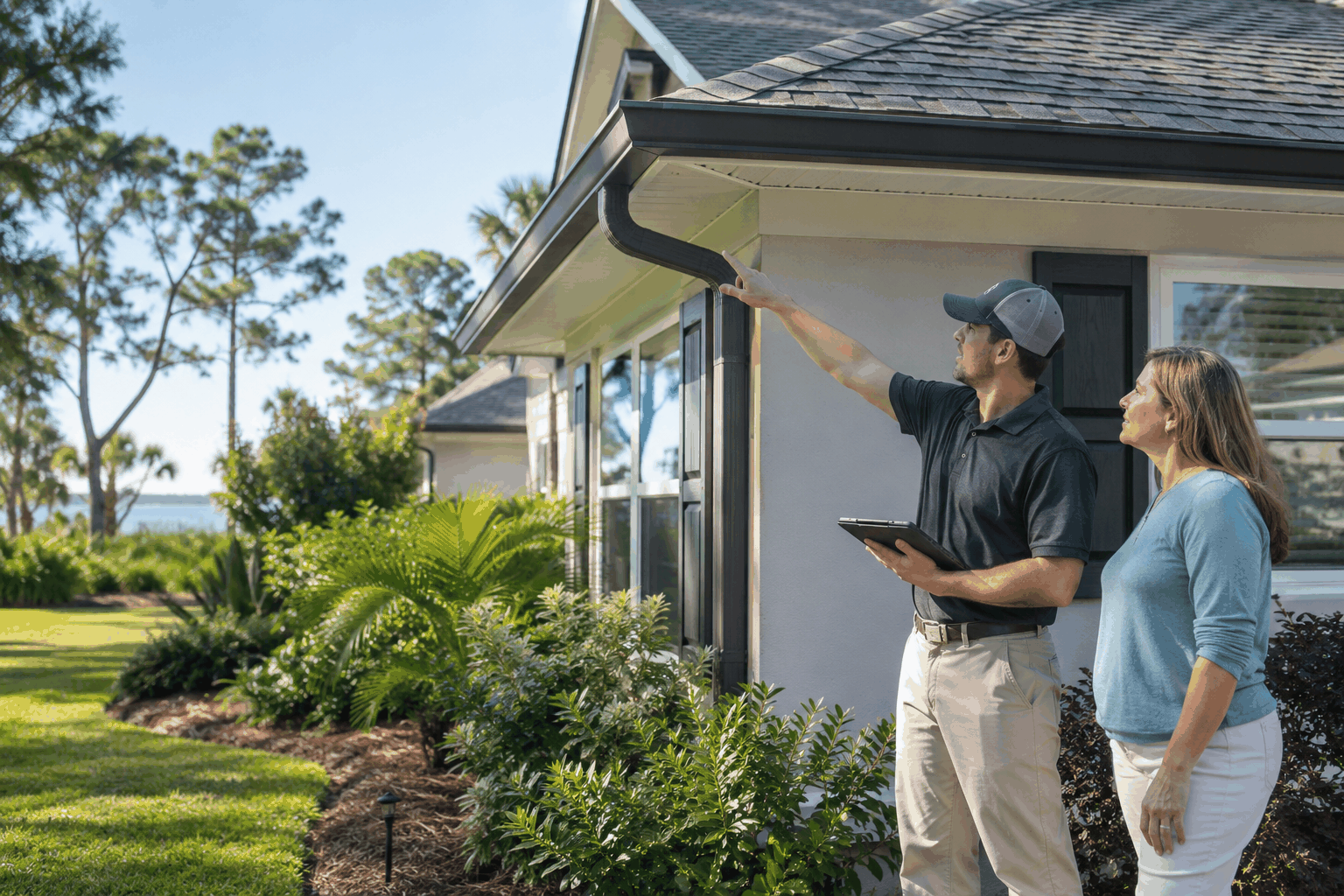
Gutters, downspouts, valleys, roof edges and ground-level discharge points all have one job: move water away from the building. Leaves, pine needles, roof granules, landscape growth and disconnected downspouts can interrupt that path. Look for overflow marks, erosion, staining and water collecting near the foundation after heavy rain.
When a drainage concern appears, document the location and address the cause. Cleaning a gutter does not correct a damaged slope, a blocked underground discharge or a grading problem by itself.
Watch the details storms test first
Storms do not only affect large roof surfaces. Wind and rain also test flashing, pipe boots, vents, edge metal, wall transitions, fasteners and penetrations. After a significant storm, use safe ground-level views and interior checks to look for changed conditions. A small displaced detail can become a larger leak path if it is left undocumented.
Avoid walking a roof after weather. Wet surfaces, hidden damage and loose materials can turn a quick check into an injury.
A regular roof inspection helps turn visible changes into a documented next step.
Make ventilation part of the conversation
Attic ventilation and insulation conditions can influence heat, moisture and the aging of roof materials. Visible signs such as unusual attic moisture, condensation, damp insulation or persistent interior staining deserve professional follow-up. Ventilation is not a magic fix, and changing one component without understanding the whole assembly can create new problems.
Ask your contractor to explain what is visible, what is inaccessible and what additional evaluation would be needed before work is recommended.
Build a twelve-month record
A yearly record can include dated photographs, inspection notes, completed repairs, roof age, product information, warranty documents and changes in the property. This is useful for homeowners, managers and future buyers. It also gives a contractor better information when the next issue appears.
The Coastal Shield Home Maintenance Plan is designed around preventive inspection, documentation, maintenance coordination and priority service. It is not insurance, a home warranty or an open-ended repair promise. The written plan and warranty documents control eligibility, inspection timing and available coverage.
SOS’s home maintenance plan explains the annual review and recordkeeping path.
A simple maintenance rhythm
Walk the property after major weather, keep drainage paths clear, schedule the required annual review and address visible action items before the next season. If a repair is needed, ask for a separate scope so routine documentation and construction work stay clear.
SOS Construction & Roofing can help connect roof care, whole-property observations and repair planning across Northwest Florida.
- After storms: inspect from safe viewpoints and photograph changes.
- Quarterly: look at gutters, downspouts and visible drainage.
- Annually: complete the required roof and property review.
- At repair time: update the property record and keep the written scope.
Start a better record before the next storm: request a free estimate or ask SOS about the annual inspection and maintenance path.
Start a free estimate request →