Commercial roofing is an operating decision as much as a construction decision. A roof protects inventory, equipment, employees, tenants and the continuity of the building. For a low-slope TPO roof, a useful plan starts with the existing membrane and substrate, then accounts for seams, penetrations, flashing, drainage, access, safety and how the work will affect the operation below.
Understand the existing assembly
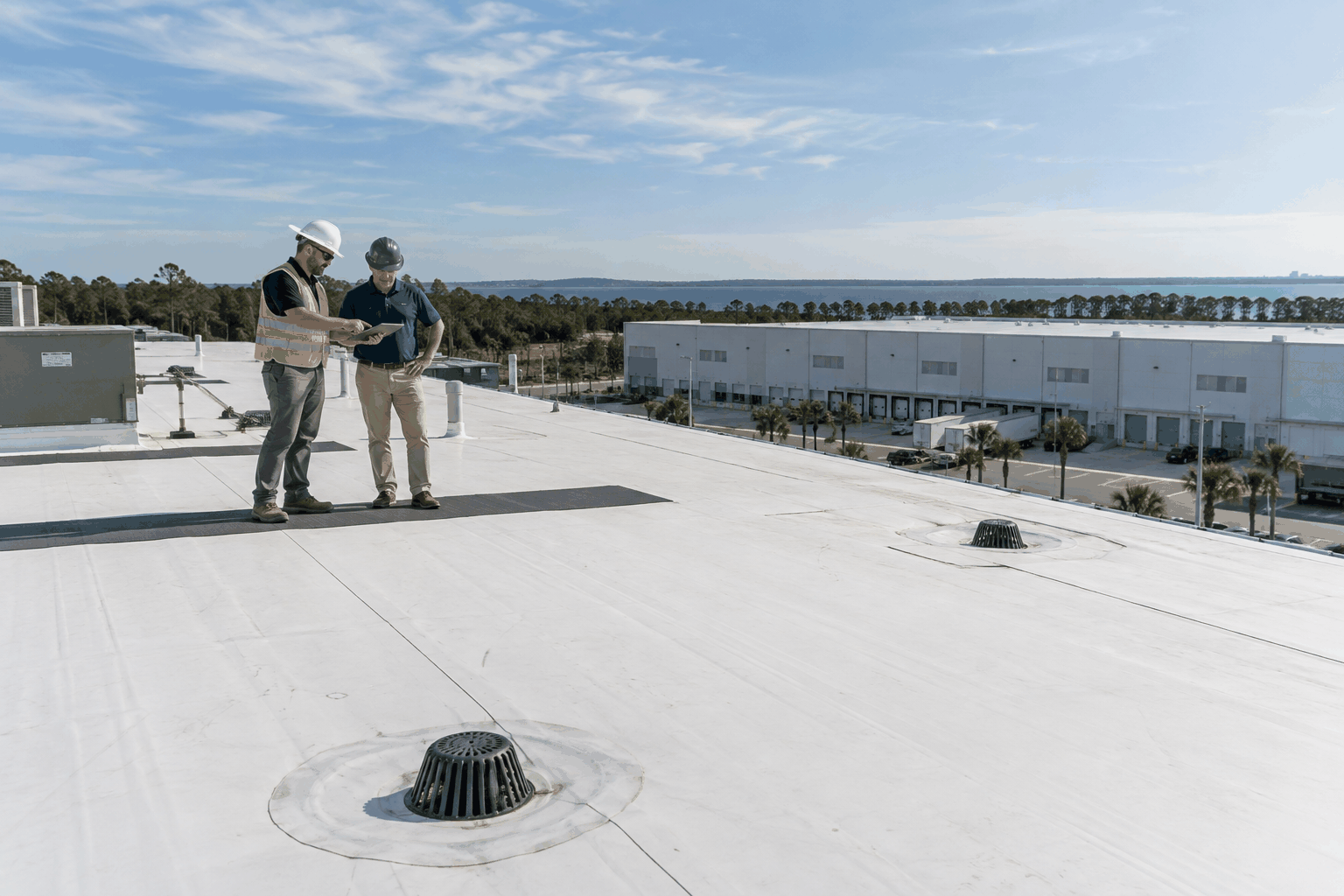
Before selecting repair, recovery or replacement, document what is visible about the existing roof. Look at membrane condition, seams, edge details, penetrations, rooftop equipment, insulation clues, ponding evidence and drainage. The building’s history matters too: previous repairs, leaks, changes in use and areas that have been inaccessible.
A visual review does not reveal every concealed condition. It should clearly identify what was observed, what was not accessible and what additional testing or investigation would be required.
Seams and penetrations deserve attention
TPO roofs depend on consistent membrane, seam and flashing details. Rooftop equipment, pipes, curbs, drains, wall transitions and edge conditions can create complex paths for water. Repairs should address the actual detail rather than simply covering the visible interior stain.
Ask how proposed repairs will be documented and whether the repair is intended as short-term stabilization, a defined service-life extension or part of a broader replacement plan.
See how SOS evaluates seams, penetrations and drainage for commercial TPO roofing.
Plan around building operations
A commercial roof project may need to work around tenants, deliveries, production, HVAC access, parking, security and weather. A good proposal explains access, staging, noise, debris, daily cleanup, safety controls and communication. Phasing may be appropriate when the building, system condition and schedule support it.
The best construction sequence is the one that protects the property while keeping the owner’s operating needs visible in the project conversation.
Compare proposals by risk and documentation
Compare the system, substrate assumptions, insulation, membrane thickness or product level, flashing, edge metal, drains, warranty documents, maintenance expectations and closeout records. Ask for photographs, a roof plan when helpful and a description of concealed-condition allowances.
A commercial owner should also know who is accountable day to day. Project oversight, written updates and a closeout package make future maintenance and capital planning easier.
For buildings with a broader repair or replacement question, review the commercial roofing service.
Build a lifecycle plan
TPO work should be considered alongside inspections, drainage cleaning, rooftop equipment coordination, leak response, tenant communication and budget timing. A maintenance record can help the owner decide whether to repair now, phase work or plan replacement before an emergency forces the decision.
SOS Construction & Roofing provides commercial repair, replacement and maintenance conversations for Northwest Florida property owners and facilities teams. The appropriate scope depends on the building and written project requirements.
- Document the current roof and limitations.
- Review seams, penetrations, flashing and drainage.
- Plan access and operations before work starts.
- Compare closeout records and maintenance expectations.
- Keep repair decisions connected to a capital plan.
Managing a commercial roof? Request a free project conversation and bring the building’s access, operating and documentation needs into the first review.
Start a free estimate request →